

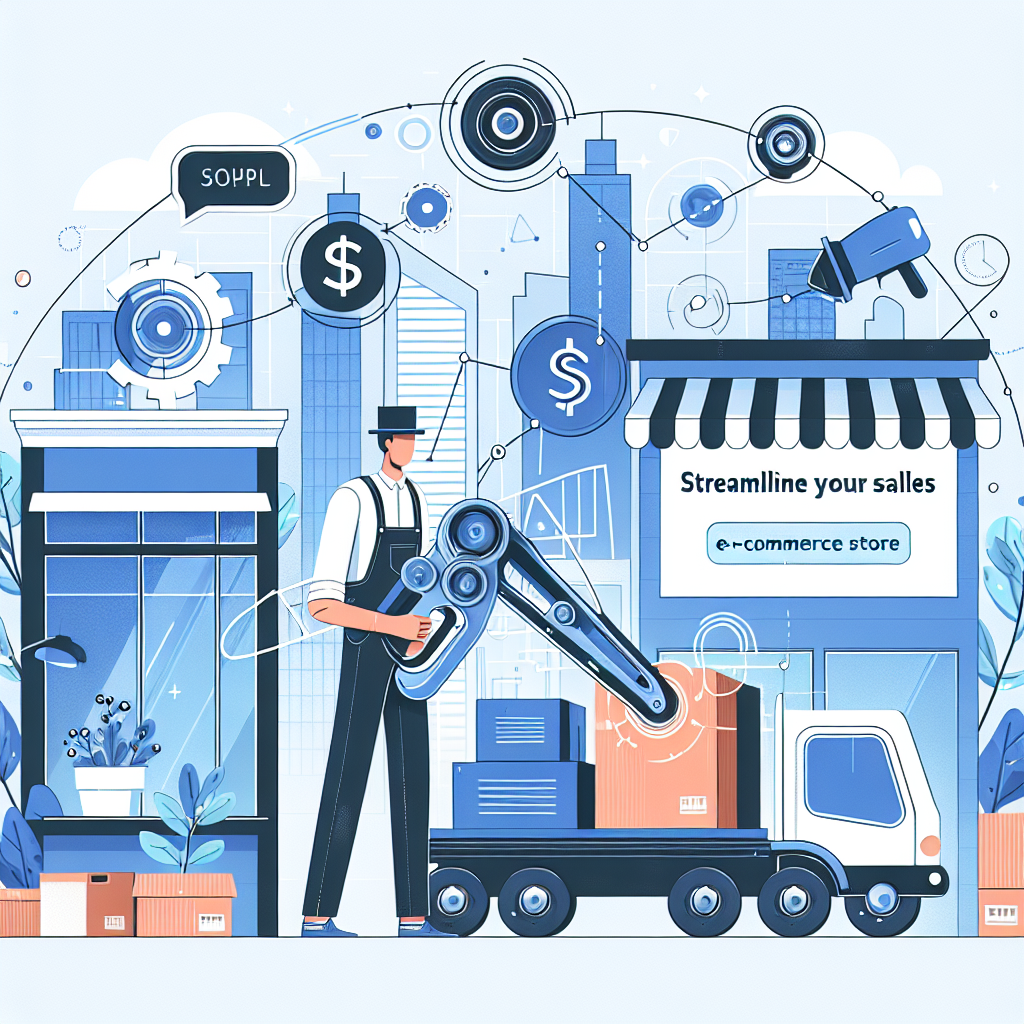
Streamline Your Sales: Automating E-Commerce Stores
Introduction
E-commerce automation is rapidly transforming the landscape of online retail. By leveraging technology to handle repetitive tasks, businesses can streamline their sales processes and focus on growth. In this article, we will explore the significance of automating e-commerce stores and how it can lead to improved efficiency and increased revenue.
Understanding E-Commerce Automation
E-commerce automation refers to the use of software and tools to perform tasks without human intervention, allowing for a more efficient workflow. This encompasses a wide range of activities, including inventory management, order processing, and customer relationship management (CRM). The benefits of automation include reduced labor costs, minimized errors, and enhanced customer experience.
Key Areas to Automate
Inventory Management
Automated inventory management involves using tools and software to track stock levels, manage suppliers, and forecast demand. By integrating these systems, e-commerce businesses can:
- Reduce the risk of stockouts or overstock situations.
- Optimize order fulfillment processes.
- Gain real-time insights into inventory levels.
Order Processing
Streamlining order fulfillment is critical for maintaining customer satisfaction. Automation in this area can:
- Decrease processing times.
- Enhance accuracy in order management.
- Integrate seamlessly with shipping solutions for faster delivery.
Customer Relationship Management (CRM)
Automating customer interactions through CRM solutions helps businesses understand their customers better. Automation can facilitate:
- Personalized communication based on customer behaviors.
- Automated follow-ups and feedback requests.
- Improved customer engagement through tailored marketing strategies.
Choosing the Right Tools
Selecting the right automation tools is crucial for successful e-commerce operations. When evaluating options, consider:
- Ease of integration with existing systems.
- Scalability to accommodate business growth.
- User-friendly interfaces and customer support.
Popular e-commerce automation platforms include Shopify, WooCommerce, and BigCommerce, each offering unique features suitable for different business models.
Integrating Automation with Marketing
Automated marketing campaigns can significantly enhance customer engagement. By utilizing tools that automate email marketing, social media posting, and ad placements, businesses can:
- Reach customers at the right time with relevant offers.
- Analyze campaign performance to optimize future marketing efforts.
Measuring Success
To determine the effectiveness of e-commerce automation, it’s vital to establish key performance indicators (KPIs). These may include:
- Order fulfillment time.
- Customer satisfaction scores.
- Return on investment (ROI) from automated tools.
Regularly analyzing this data helps businesses optimize their processes and continue improving efficiency.
Challenges of Automation
While automation offers numerous advantages, there are common pitfalls to watch for:
- Over-reliance on technology can lead to loss of personal touch.
- Integration challenges may arise with legacy systems.
- Initial setup costs can be significant.
Finding the right balance between automation and personal interaction is key to maintaining customer loyalty.
Conclusion
In conclusion, automating e-commerce processes can lead to streamlined operations, enhanced customer satisfaction, and increased sales. As businesses continue to adapt to the digital landscape, embracing automation will be vital for success. We encourage you to explore the various tools available and take the first steps toward a more efficient online store.
FAQ
What is e-commerce automation?
E-commerce automation is the use of technology to perform repetitive tasks in online retail, enhancing efficiency and reducing human error.
How can automation improve sales?
By streamlining processes and enhancing customer experiences, automation can lead to increased sales conversions and customer loyalty.
What tools are best for automating an online store?
Popular tools include Shopify, WooCommerce, and BigCommerce, which offer various automation features suitable for e-commerce businesses.
Are there any disadvantages to automation?
Challenges include potential over-reliance on technology and the need for substantial initial investment in systems.
How can small businesses benefit from e-commerce automation?
Small businesses can leverage automation to enhance efficiency, reduce operational costs, and focus on growth strategies.