
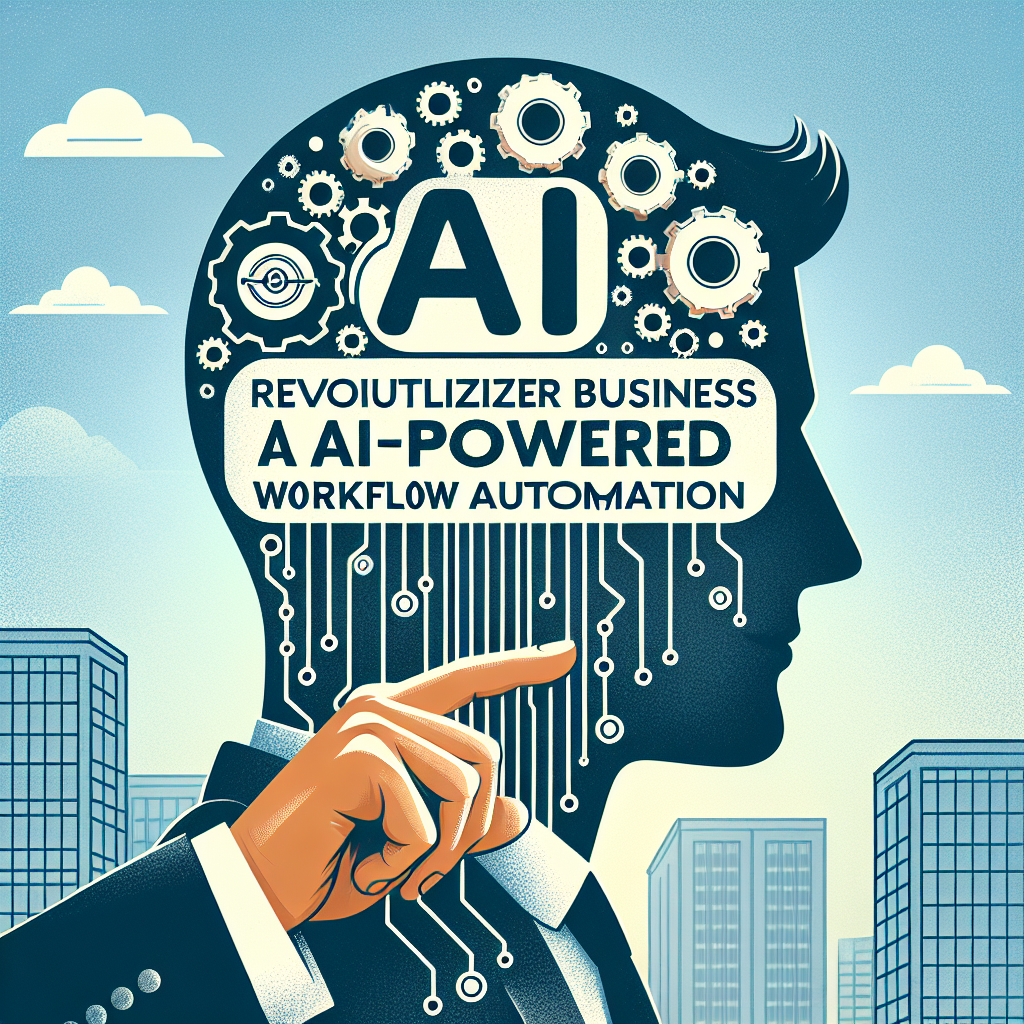
Revolutionize Your Business with AI-Powered Workflow Automation
Introduction
In today’s fast-paced business environment, the integration of AI-powered workflow automation is transforming how companies operate. Businesses are increasingly realizing the importance of streamlining their processes, reducing manual effort, and enhancing productivity. AI technology enables organizations to optimize workflows and make data-driven decisions that lead to smarter business processes.
Understanding Workflow Automation
Definition and Key Concepts
Workflow automation refers to the use of technology to automate complex business processes and tasks, improving efficiency and consistency. By automating repetitive tasks, businesses can focus on strategic initiatives that drive growth. The concept encompasses various technologies and methodologies aimed at enhancing operational workflows.
Benefits of Automation in Business
- Increased efficiency and productivity
- Reduced operational costs
- Enhanced accuracy and compliance
- Improved employee satisfaction
How AI Enhances Workflow Automation
AI Technologies Used in Automation
AI technologies such as machine learning, natural language processing, and predictive analytics play a pivotal role in enhancing workflow automation. These technologies enable organizations to analyze data more effectively, predict future trends, and streamline processes. For an in-depth exploration of these technologies, consider reading this article on machine learning.
Case Studies of AI-Driven Automation
Several companies have successfully implemented AI-driven automation, resulting in significant improvements in their operations. For instance, a leading e-commerce company used AI to automate its customer service processes, resulting in reduced response times and increased customer satisfaction. A notable example of AI personalization can be found in the article Transforming E-commerce: The Power of AI Personalization.
Implementing AI-Powered Automation
Steps to Integrate AI into Workflows
- Identify processes that need automation.
- Evaluate AI technologies suitable for your business.
- Develop a clear implementation plan.
- Train employees on new technologies.
- Monitor and optimize workflows continuously.
Choosing the Right Tools and Platforms
Selecting the right business automation tools is crucial for successful implementation. Consider cloud-based automation platforms that allow for scalability and easy integration with existing systems. For a deeper understanding of available tools, you might find this guide on mastering AI workflow orchestration helpful.
Overcoming Challenges in Adoption
Common Obstacles Businesses Face
While the benefits of AI-powered automation are clear, companies may face challenges such as resistance to change, lack of skilled personnel, and high upfront costs. Recognizing these obstacles is the first step towards effective solutions.
Solutions and Best Practices
To overcome these challenges, businesses should prioritize employee training, start with pilot projects, and involve stakeholders in the decision-making process. Engaging employees early on can facilitate smoother transitions and better adaptation to new technologies.
Measuring Success
Key Performance Indicators for Automation
To determine the success of automation initiatives, businesses should track key performance indicators (KPIs) such as:
- Time savings
- Cost reduction
- Increased throughput
- Employee satisfaction rates
Tools to Analyze Effectiveness
Utilizing analytics tools can provide insights into workflow efficiency and highlight areas for improvement. This ensures that businesses can continuously optimize their processes. Solutions that integrate AI capabilities can be especially beneficial when analyzing data.
Future Trends in AI and Automation
Emerging Technologies and Predictions
As AI continues to evolve, we can expect to see advancements in areas such as intelligent automation and AI-enhanced decision-making. These trends will further drive digital transformation across industries. Companies should stay informed about emerging technologies to remain competitive.
The Evolving Role of AI in Business
AI is positioned to play an integral role in shaping the future of business processes, enabling organizations to stay competitive and responsive to market changes. The ongoing development of AI tools and frameworks will contribute significantly to this evolution.
Conclusion
AI-powered workflow automation is not just a trend; it is becoming a necessity for modern businesses looking to enhance efficiency and remain competitive. By embracing AI technology, companies can streamline their operations, reduce costs, and improve decision-making processes, ultimately leading to better business outcomes.
FAQ
What is AI-powered workflow automation?
AI-powered workflow automation uses artificial intelligence to automate business processes, improving efficiency and accuracy.
How can businesses start with automation?
Businesses can start by identifying repetitive tasks, evaluating AI tools, and implementing small-scale automation projects. Developing a clear strategy is essential for successful automation.
What industries benefit the most from AI in workflows?
Industries such as healthcare, finance, retail, and manufacturing can significantly benefit from AI-driven workflow automation. Each of these sectors stands to gain from improved efficiency and enhanced accuracy.
How can businesses measure the effectiveness of automation?
Businesses can measure effectiveness through key performance indicators such as time savings, cost reductions, and employee satisfaction. Regularly tracking these metrics is important for continual improvement.
What are the common challenges in implementing AI automation?
Common challenges include employee resistance, lack of skilled personnel, and high initial costs, which can be overcome through training and pilot projects. Addressing these issues proactively can lead to smoother transitions.
What tools can help analyze automation effectiveness?
Analytics tools and performance tracking software can help organizations analyze the effectiveness of their automation initiatives. These tools provide essential data that drive informed decision-making.